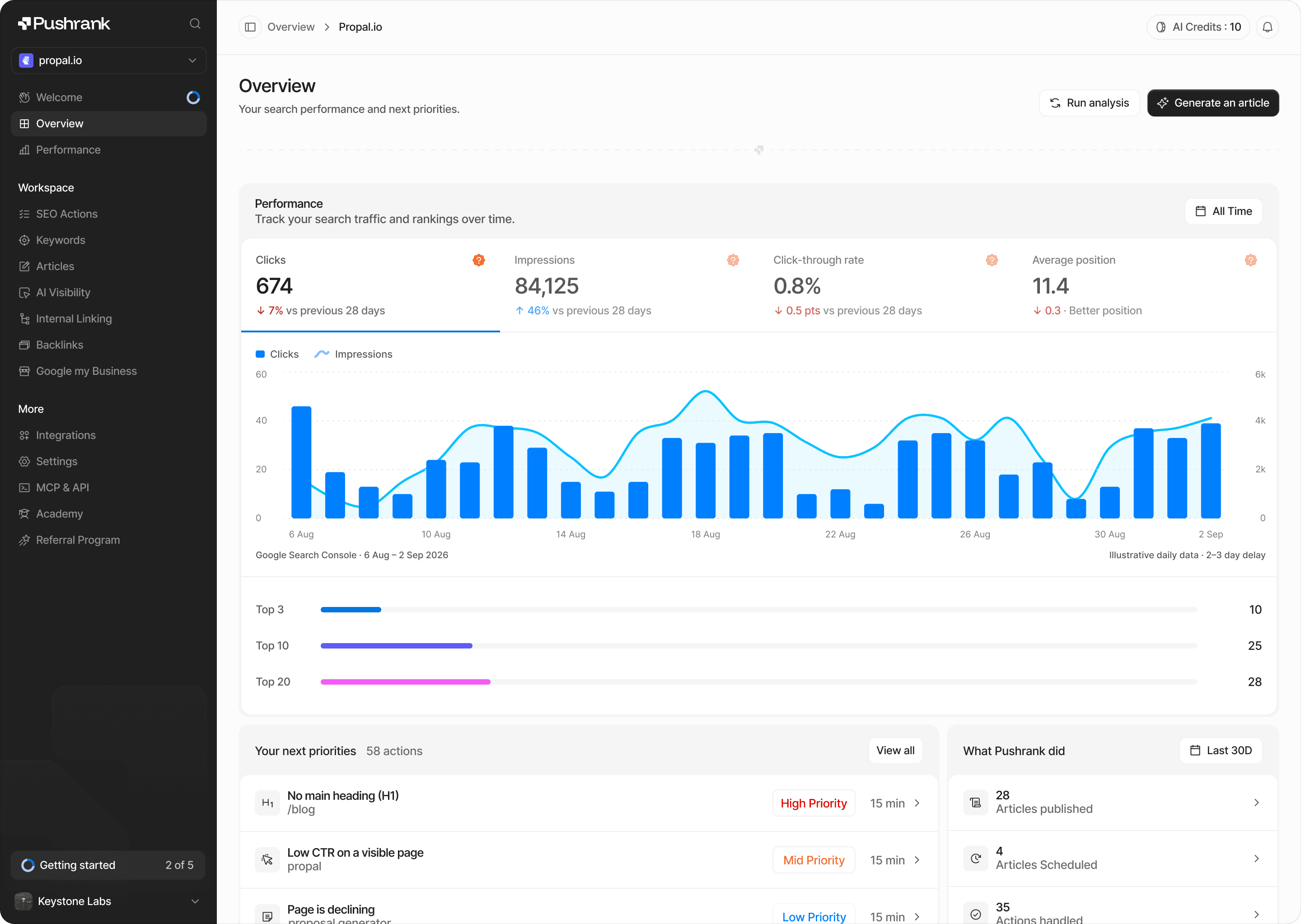
It reads Google before writing
The titles and snippets of the top results for your keyword, and the type of page Google puts first.
Pushrank reads Google's results for your keyword, then writes with Souleymane Koné's method.
AI SEO writing means using artificial intelligence to produce content that works for your readers and for Google. Pushrank doesn't just generate text: it reads Google's results for your keyword and applies an SEO consultant's method, so you get AI SEO content built to rank.
The titles and snippets of the top results for your keyword, and the type of page Google puts first.
The article's outline, the search intent and the target length, set before the first line is written.
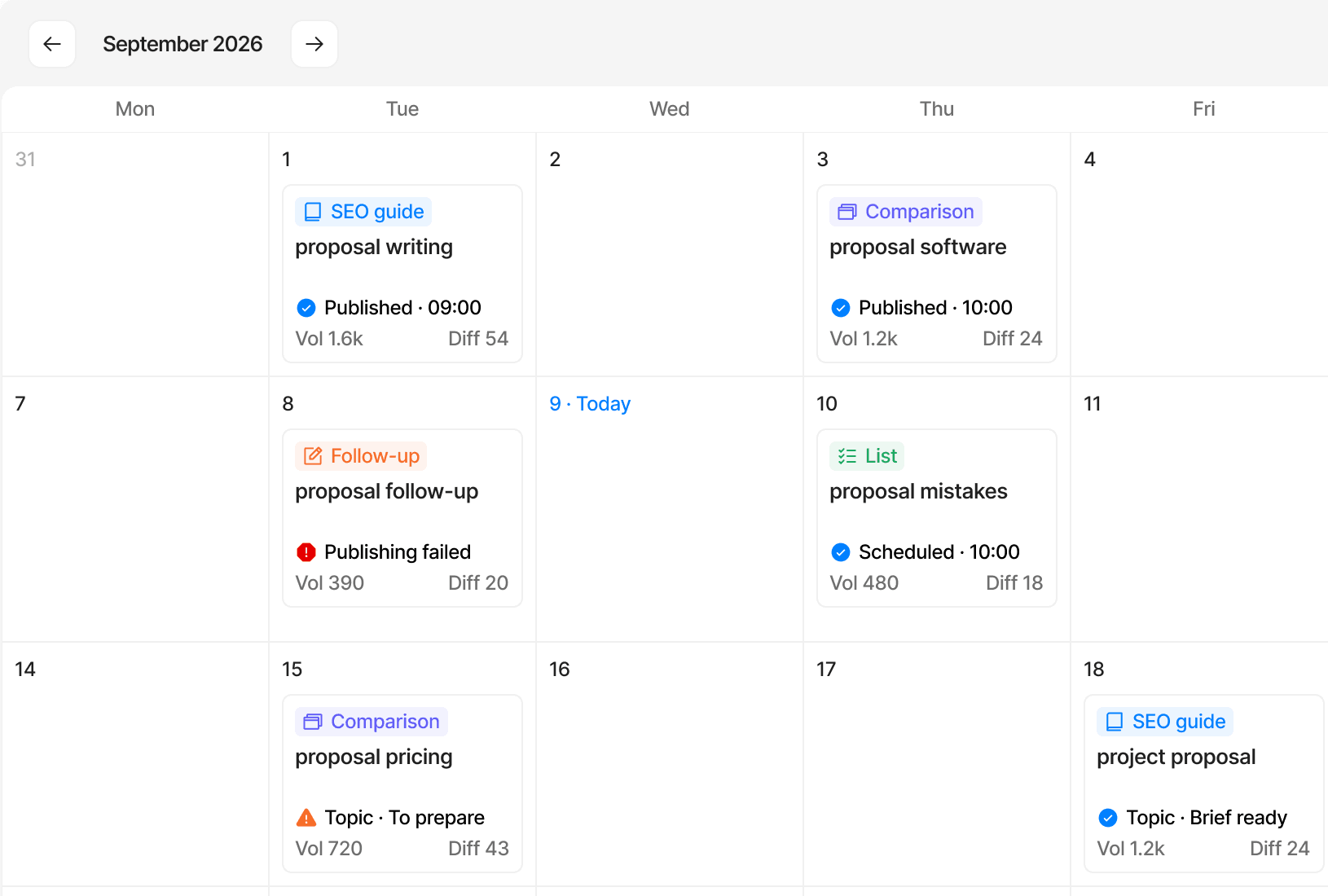
Your scheduled and published articles, day by day, at the pace you choose.
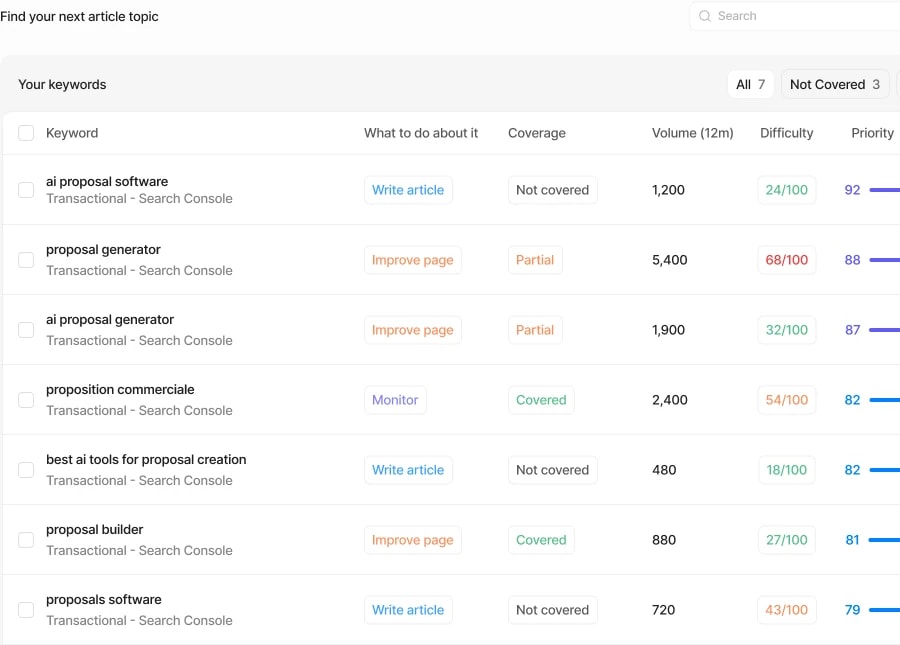
From your keywords or your monthly plan, with the volume, the difficulty and the recommended action for each.

It reads Google, prepares the brief, writes the article, checks it and places it in your calendar.
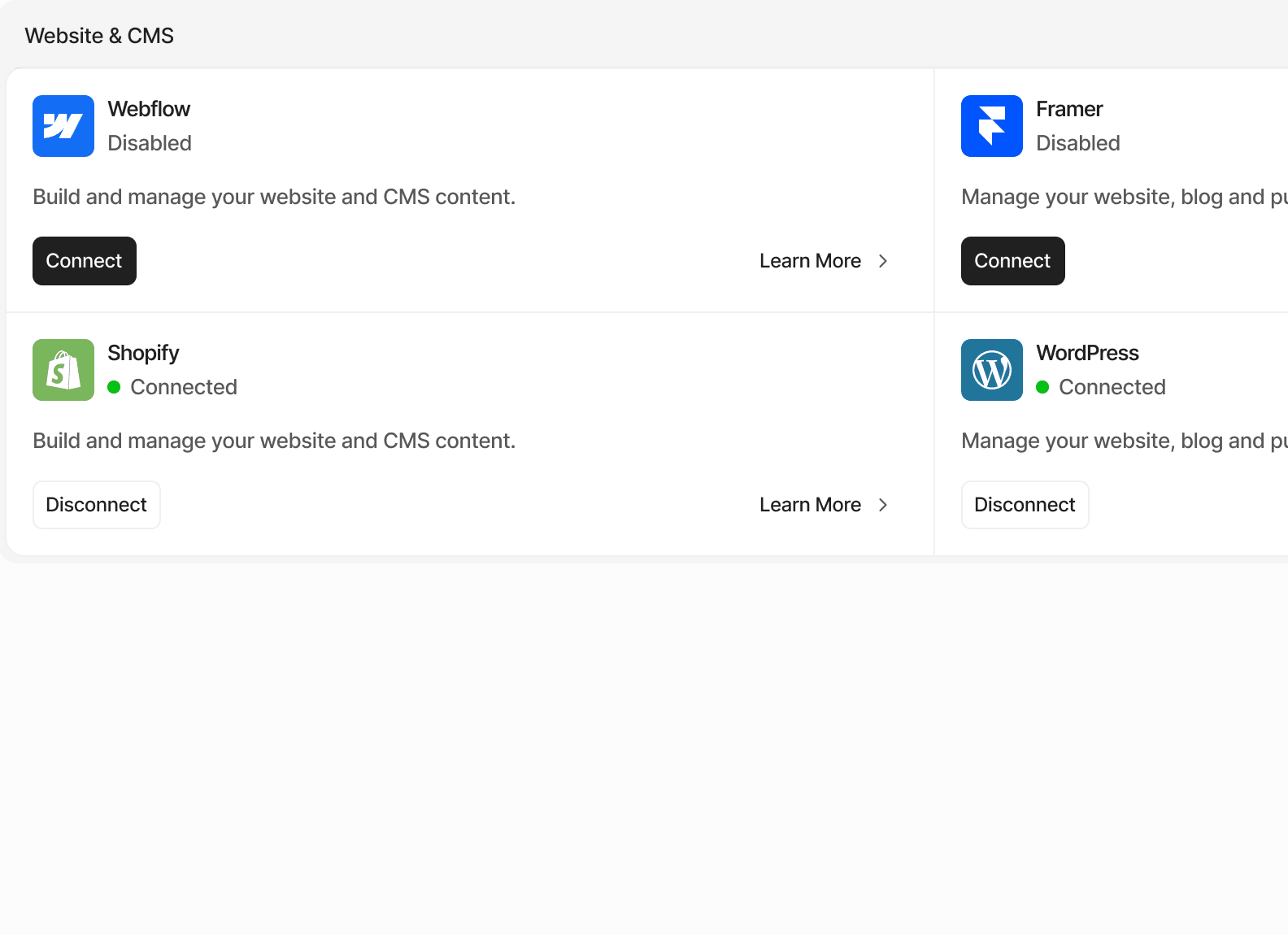
On WordPress, Webflow or Wix, after you review it, or on its own if you turn on automatic publishing.
Not a generic recipe, but the result of years of R&D on Google and of e-commerce, SaaS, blog, showcase-site and agency projects.
Souleymane Koné's rules are coded into Pushrank. The AI draws on his knowledge base as it writes, and every article is checked against those rules.
Google's results, web research and an SEO knowledge base are queried at the moment of writing. Only official sources get cited.
No invented prices or offers, no links to a competitor. Pushrank writes from what it knows about your business.
Title tag, meta description, a single H1, subheadings, structured data, images with alt text and internal links to your real pages.
70/100quality score required to auto-publish
You set the tone, the point of view, the call to action and your writing instructions. Guide, comparison, how-to or review: you pick the format.
Another question? Write to us.
SEO writing (or SEO copywriting) means writing structured content that ranks on Google while genuinely answering the search intent behind the query. Writing for SEO doesn't mean stuffing keywords: it means covering a topic in depth and answering the questions your readers actually ask.
Most tools generate text from a keyword. Pushrank first reads Google's results, prepares a brief, applies Souleymane Koné's method and checks every article before it reaches you.
The titles and snippets of the top results for your keyword, the angles they cover and the type of page Google favors. Pushrank doesn't copy competitors' headings: it draws on them to build its own outline.
Blog articles: guides, comparisons, how-tos, reviews, promotional articles, or articles based on your own template. Pushrank doesn't write product pages or service pages.
Yes. When you sign up, you tell Pushrank whether your site is an e-commerce store, a SaaS or a showcase site: that profile shapes the rules it applies and the call to action. The tone, the point of view and your instructions are yours to set.
Yes. Every article comes optimized on-page: title tag, meta description, a single H1, subheadings, structured data, images and internal links. It's checked before publishing, and in automatic mode it only goes live with a score of at least 70/100.
Up to 30 with a subscription. Topics come from your keyword research and your monthly plan, and every article strengthens your internal linking.
English and French.