The errors holding your pages back
Missing, empty or duplicate H1s, missing title tags or meta descriptions, images without alt text, each with its severity.
Pushrank spots what's holding your pages back and gives you the fix, sometimes ready to copy and paste.
On-page SEO covers every optimization you make directly on your pages to rank higher on Google. Pushrank spots what's holding your pages back and gives you the fix to apply: the problem and the solution, for real SEO optimization.
Missing, empty or duplicate H1s, missing title tags or meta descriptions, images without alt text, each with its severity.
Pushrank writes a title tag, meta description or H1 for your page. You click "Copy" and paste it into your CMS.
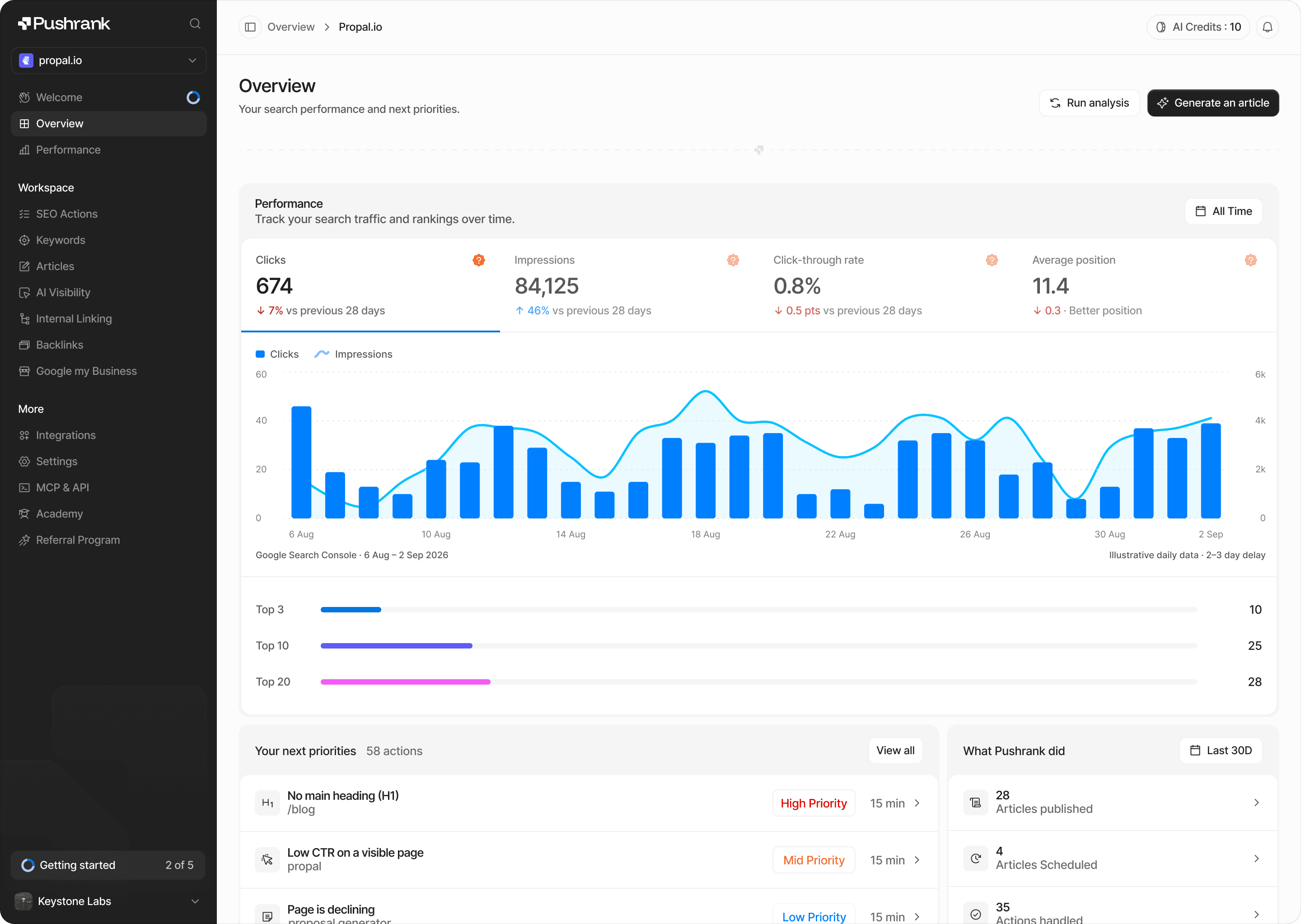
Your page shows up often on Google but gets few clicks? Pushrank suggests a new title, based on your Search Console data.
Pushrank crawls your pages and checks their tags, headings and images.

Your fixes page by page, sorted by severity then by effort, with the steps to follow in your CMS.
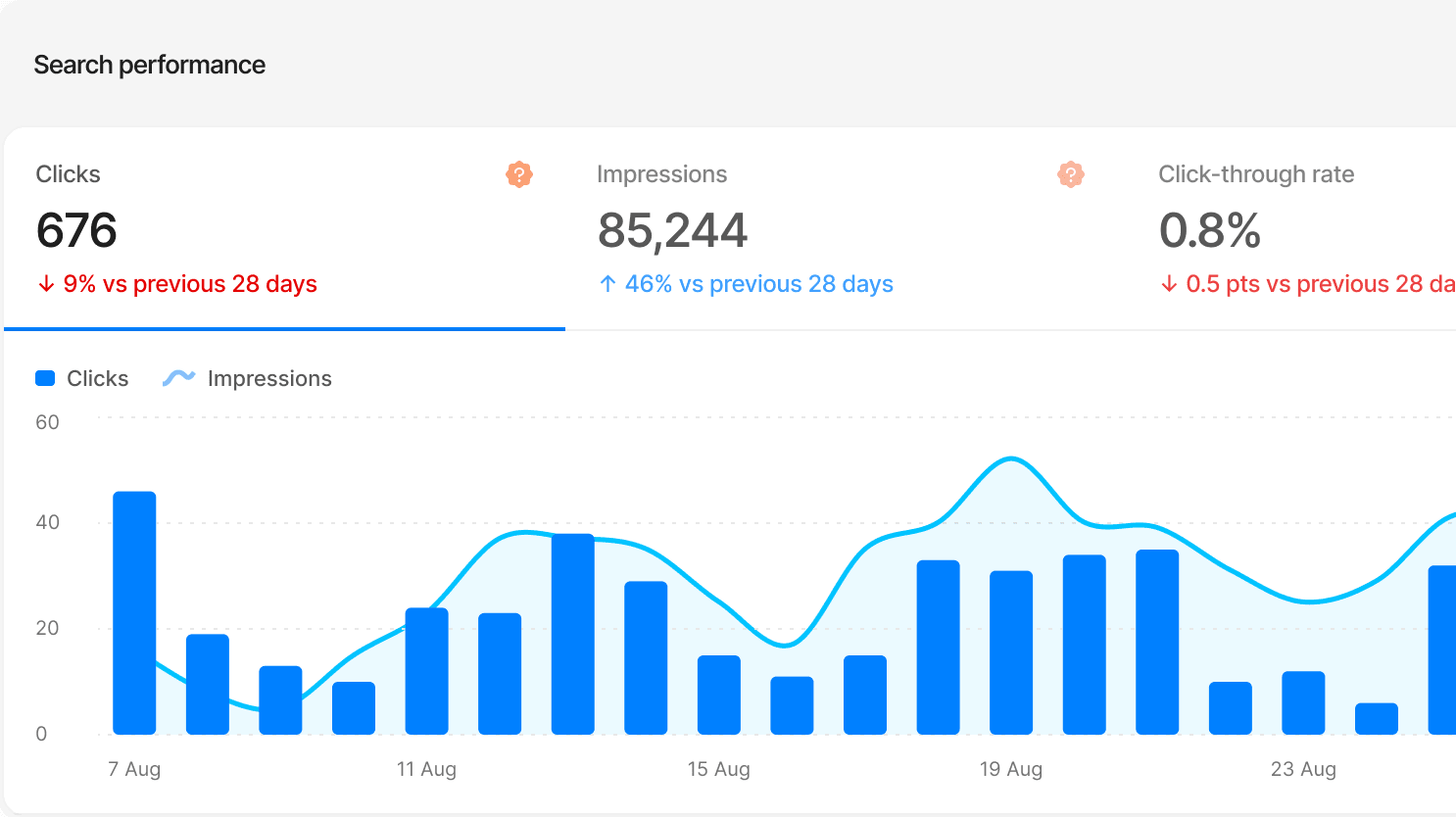
You paste the fix into your site; Pushrank doesn't touch it. Search Console then shows you the effect on your clicks.
On-page SEO covers everything you optimize directly on your pages, from content and tags to internal linking and user experience. It's the part of SEO you fully control.
Backlinks depend on other sites. Your on-page SEO depends only on you, and its results often come faster than link building's.
The title tag, the meta description and the heading tags structure your page for Google. A missing H1 can hold back your rankings on its own.
Pages that answer search queries precisely attract the right visitors, and clear, well-structured pages convert better.
Page speed, responsive design and Core Web Vitals affect your rankings. Pushrank measures LCP, CLS and INP on your key pages, on mobile and desktop.
A site that's well optimized on-page attracts quality backlinks more easily. It's the foundation everything else in your SEO is built on.
Another question? Write to us.
On-page SEO, or on-page SEO optimization, covers every optimization applied directly to your pages: content, title tags and meta descriptions, heading tags, internal linking and user experience, to improve your rankings on Google.
On-page SEO is about optimizing your own pages (content, tags, internal links), while off-page SEO is about external factors such as backlinks.
Missing, empty or duplicate H1s, missing title tags and meta descriptions, images without alt text, and pages that show up often on Google but get few clicks, according to your Search Console. These errors also count toward your SEO audit score.
No. Pushrank writes the fix, and you paste it into your site. For the title tag, meta description and H1, the text is ready to copy, and every action comes with the steps to follow in your CMS.
By severity first (blocking, major, minor), then by the effort involved. You know where to start without sorting anything yourself.
Yes. Every month, a content plan tells you which topics to cover and in what order, and Pushrank writes the articles with a title tag, a meta description, a single H1 and subheadings.
The two work together, but on-page SEO is the starting point: it's the lever you fully control, and the one that delivers results fastest.