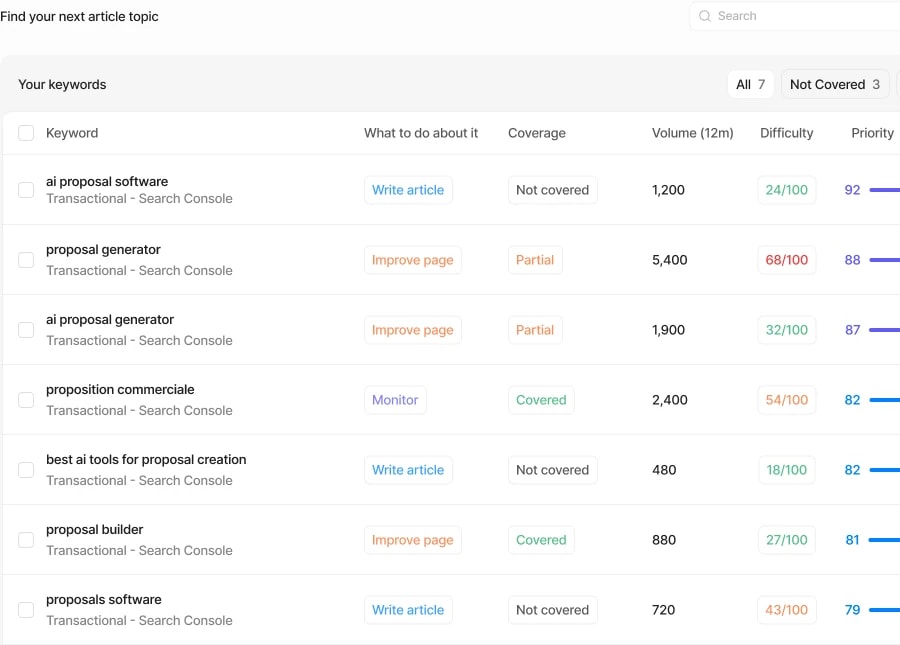
Every keyword's position, dated
For each keyword, the position of your best page, the URL that ranks, the date of the reading, and the places gained or lost since the last one.
Your Google position for every keyword that matters, dated, with how it moves and what to do next.
SEO rank tracking measures, over time, the Google position of your pages for the keywords that matter to your business. Pushrank combines dated readings of Google's results page with your Search Console data.
For each keyword, the position of your best page, the URL that ranks, the date of the reading, and the places gained or lost since the last one.
The top ten organic results at the time of the reading, your page among them, and the type of page Google puts first.
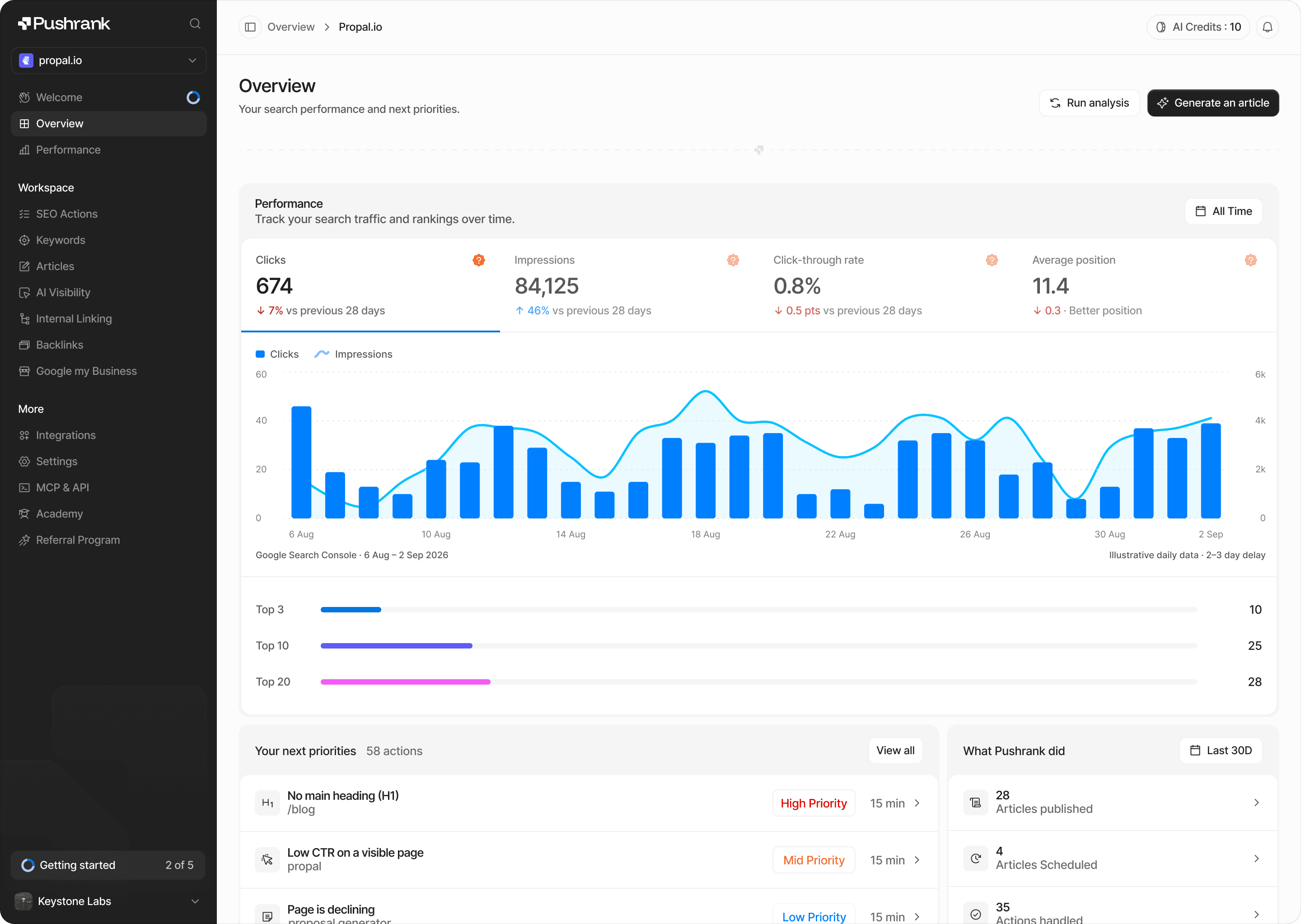
How many of your pages sit in the top 3, top 10 and top 20 according to your Search Console, next to your average position.
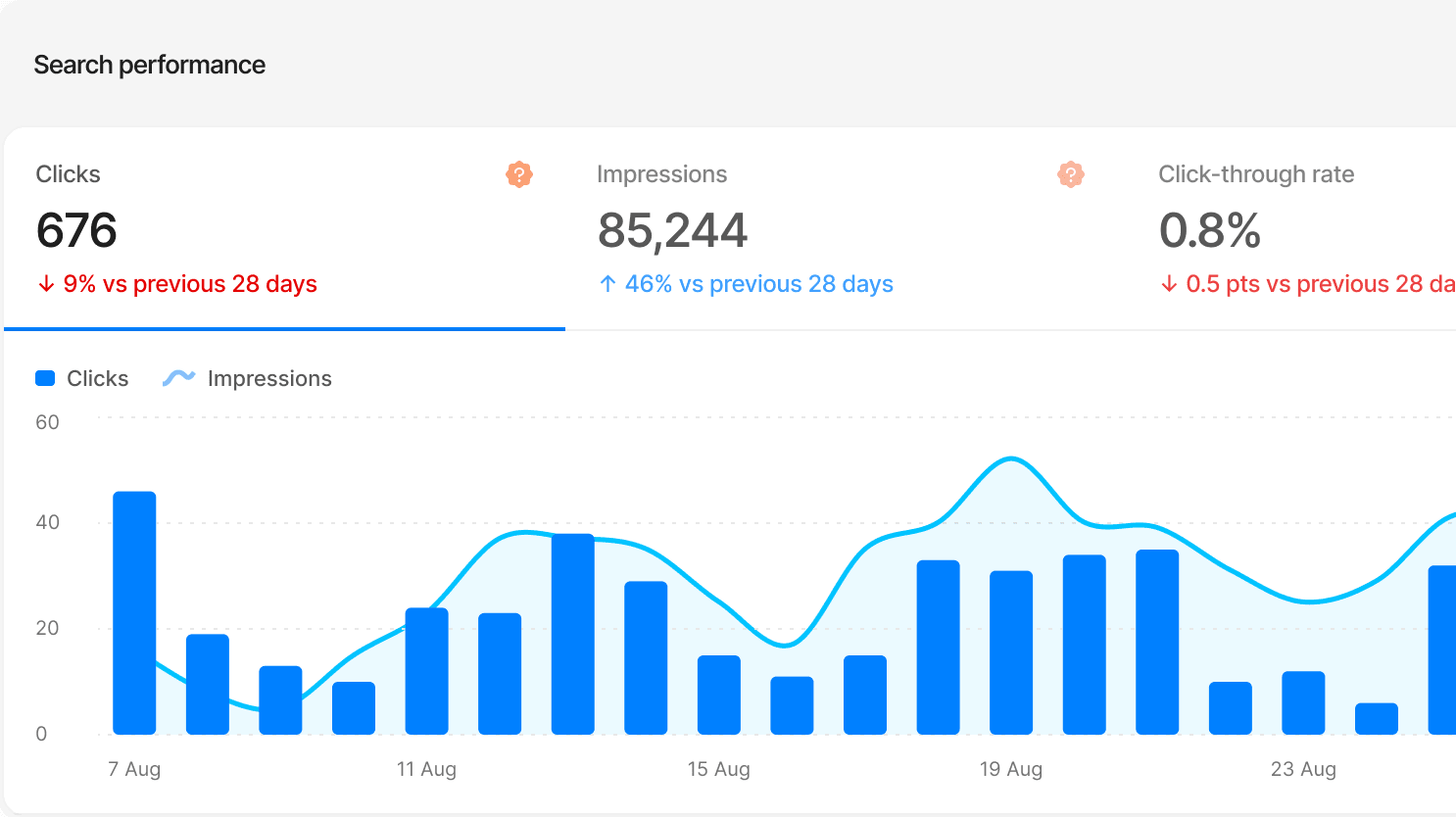
With read-only access. Every night, Pushrank pulls your clicks, impressions and average position, by query and by page.

On the first page, in your site's country and language, every month and on demand. Every reading is dated.
Top 3: nothing to do. Positions 4 to 15: strengthen the page. Beyond that: keep an eye on it. No page: create one.
When a key page starts to slip, you see it in your rankings well before visits drop. That gives you time to react before your revenue feels it.

Search Console gives you an average over several days; a reading shows what Google displays on a given date. Pushrank combines both, and beyond page one, the average takes over.
Every reading is dated. After 30 days, Pushrank no longer shows it as your current position: it tells you the measurement is out of date.
30 daysafter that, a reading is flagged stale
Your position per keyword and your split across the top 3, 10 and 20, always next to clicks, impressions and CTR. Ten places gained without a single extra click aren't worth much.
Gaining or losing one place is normal. What's worth a closer look is several keywords in the same group dropping together, or a decline that holds over several readings.
Another question? Write to us.
SEO rank tracking, or keyword tracking, is the regular, recorded measurement of where your pages rank in search results for a list of keywords you've chosen. It shows how your visibility changes and helps you steer your strategy.
Pushrank reads the first page of Google results (10 results) for your keywords, in your site's country and language, and records the page that ranks and the date of the reading. Beyond the first page, the position comes from your Search Console average, refreshed every night when it's connected.
No. Google readings are refreshed every month, and you can rerun the measurement for a keyword on demand. Your Search Console data is refreshed every night, with Google's usual two to three day delay. What matters is the trend over several readings, not one day's number.
Pushrank doesn't track your competitors' positions over time. For each keyword, it does show you who holds the top ten spots at the time of the reading.
Your keywords come from your Search Console, the analysis of your site and keyword research. Keyword research adds up to 200 new keywords per site per month on a subscription, and 150 during the trial. Keywords that don't matter to you, you remove from your strategy.
Because the results page keeps changing, and AI Overviews, the local pack or featured snippets change your real visibility. A dated reading shows what Google displays at a given moment; the Search Console average gives you the trend over the period. The two complement each other.
First check which page actually ranks: if another URL has taken its place, it may be keyword cannibalization. Then look at who holds the top 10, and at what has recently changed on your site. Pushrank also flags pages that lose at least 30% of their clicks or impressions from one period to the next.
Rank tracking answers "where do I rank?", traffic analysis answers "how many visits does that bring?", and an SEO audit answers "why am I in this spot, and what should I fix?". The three work together, and Pushrank shows your rankings next to your clicks, impressions and search volume.