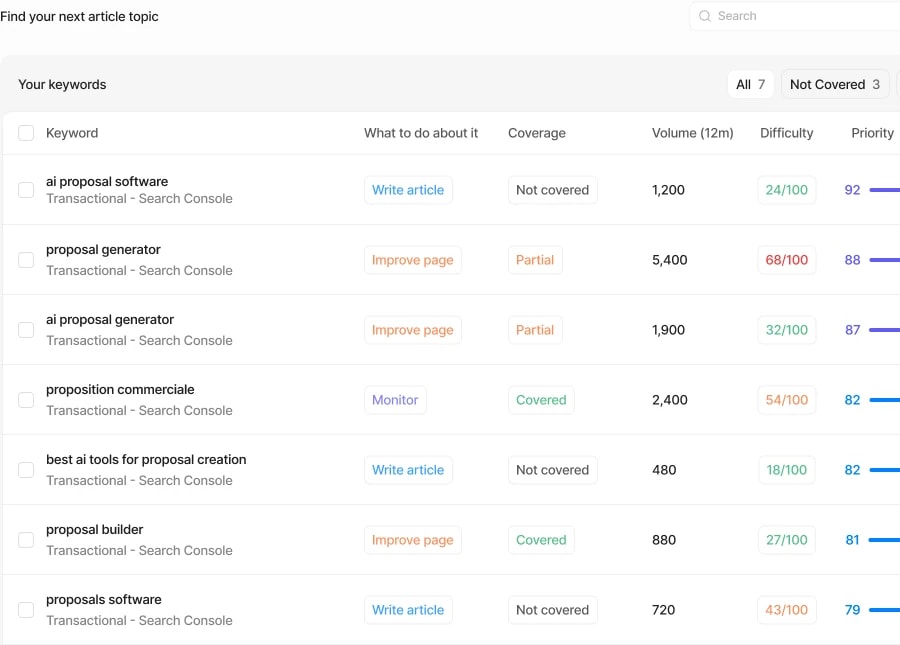
Pages competing for the same query
Every night, Pushrank flags a query as soon as two of your pages each get at least 20 impressions for it, and names the page to keep.
Spot the pages on your site that compete for the same query on Google, and avoid creating new ones.
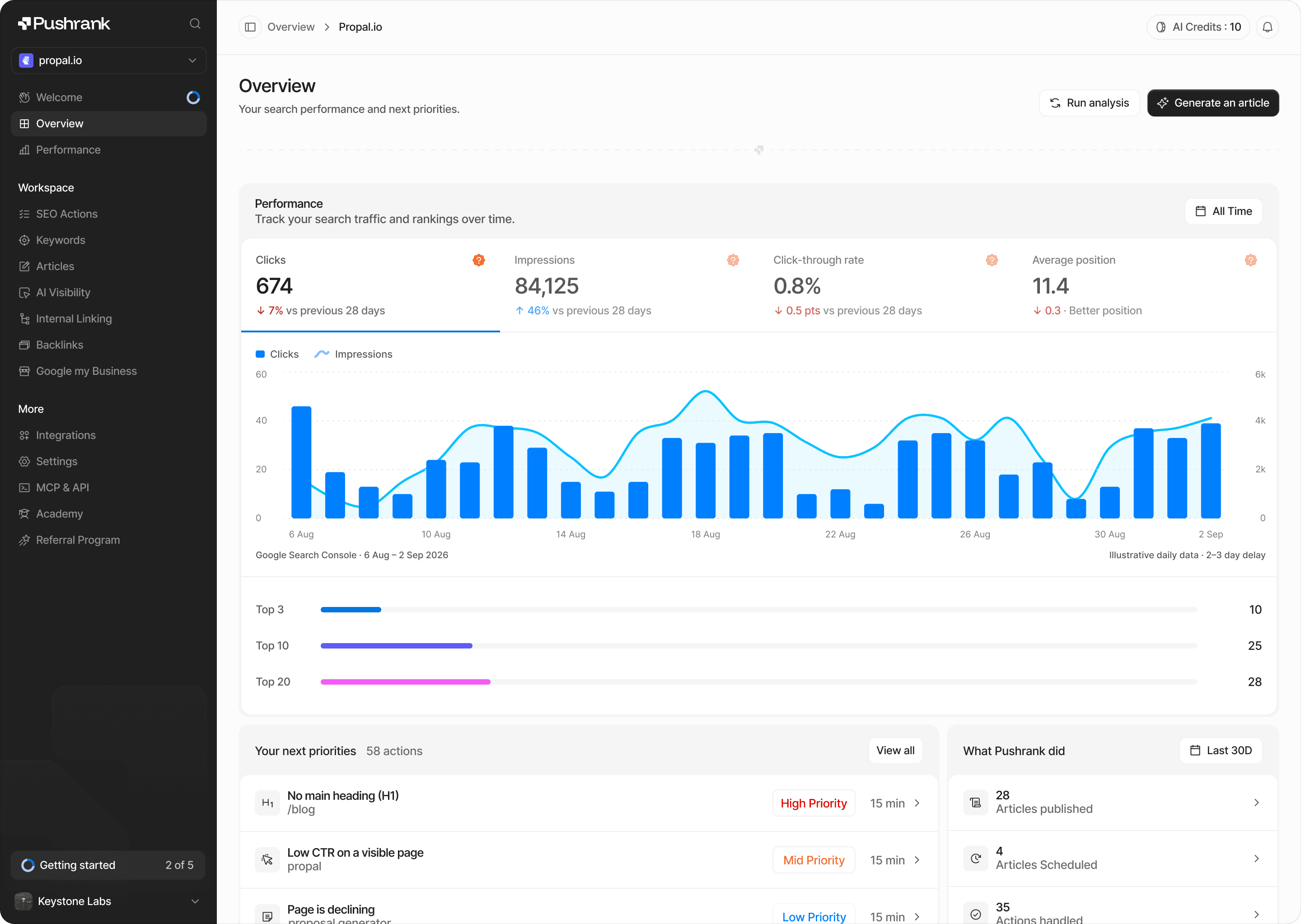
Keyword cannibalization happens when several pages on your site target the same query and compete for the same spot on Google. It often goes hand in hand with duplicate content. Pushrank spots these conflicts, tells you which page to keep, and keeps you from creating new ones.
Every night, Pushrank flags a query as soon as two of your pages each get at least 20 impressions for it, and names the page to keep.
For the competing pages, Pushrank recommends a 301 redirect or a merge into the page to keep. You apply it in your CMS.
Before writing, Pushrank checks that nothing on your site already targets the keyword. If something does, it warns you before writing.
Query by query and page by page, to find the queries where several of your pages share the impressions.

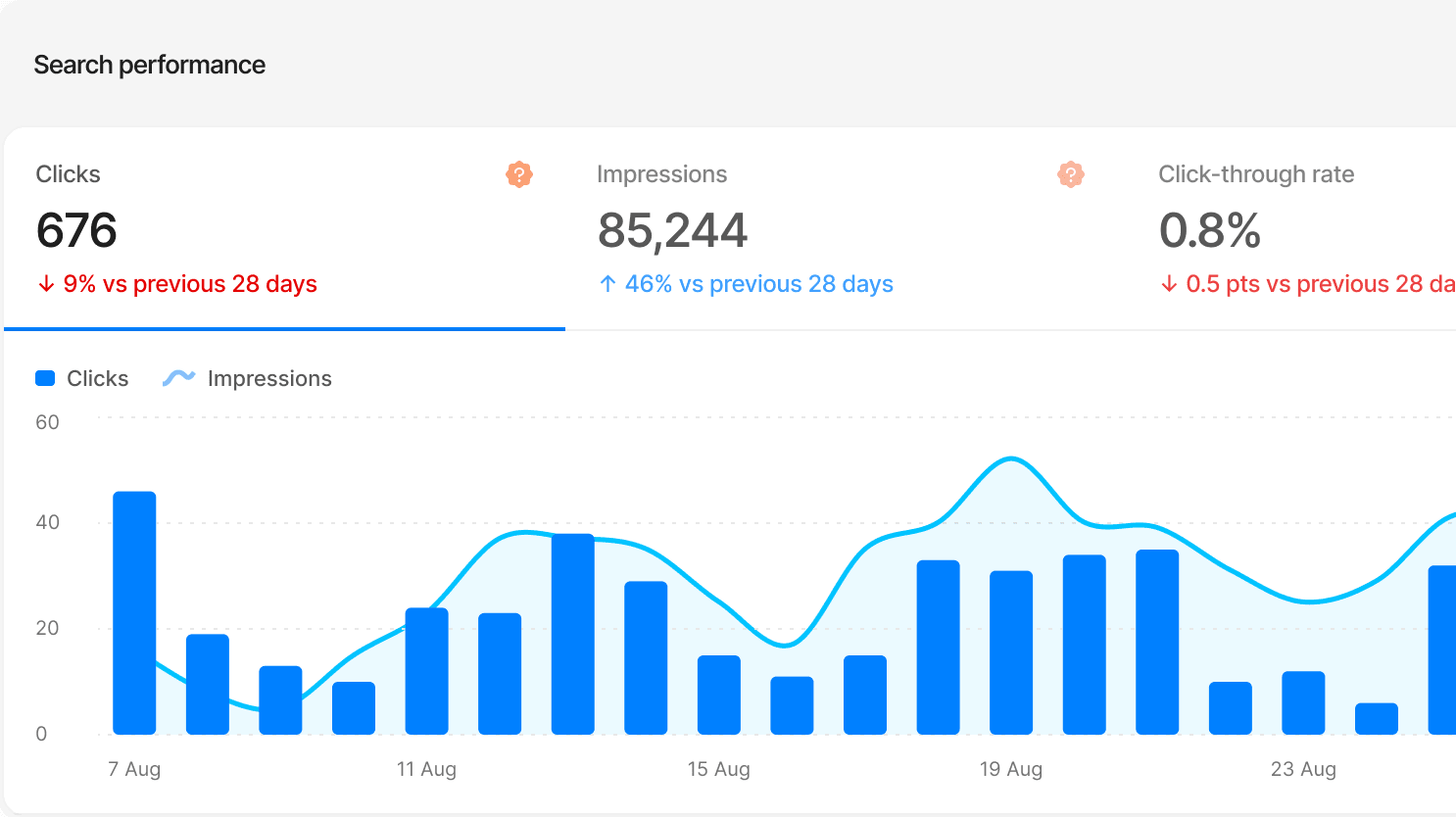
The conflict shows up in your SEO actions, with the page to keep, the competing pages and the recommended fix.
When a page already ranks for a keyword, Pushrank suggests improving it rather than writing a second one.
Clicks and impressions spread across several pages instead of building up on one, and none of them really stands out.

Internal and external links split across several URLs. None of them gains enough weight to climb.
The page it shows changes from one reading to the next, and your position becomes unstable. An old blog post can even take the place of the page that converts.
Duplicate content is about the text, cannibalization is about the query. Pushrank's audit measures pages that are 75% similar or more and factors them into your score.
75%shared text, the duplicate content bar
A guide and a product page can both appear for the same query if they meet different intents. It becomes a problem when both pages say the same thing.
Another question? Write to us.
Keyword cannibalization is when several pages on the same site target the same query. They compete for the same spot on Google, split the clicks and the authority, and none ranks as well as a single page would.
Duplicate content is about the text: two pages that are identical or nearly so. Cannibalization is about the query: two pages targeting the same keyword, even with different text. Internal duplicate content almost always leads to cannibalization.
Generally not: Google doesn't penalize a site because two of its pages look alike. It picks one version to show and sets the other aside, which then brings in nothing. Content copied from other sites to manipulate rankings is a different matter.
In two ways: in your Search Console, when several of your pages get impressions for the same query, and on the Keywords screen, when several pages of your site have ranked for the same keyword over the last 30 days. Its SEO audit also measures near-identical content, titles and meta descriptions across your pages.
Keep the target page, the one Pushrank names. If the other pages cover the same topic, move what's useful into the target page, then 301-redirect them to it. If one has its own reason to exist, rewrite it to target another query. Finally, point your internal links to the target page.
That's exactly what it checks before writing. It compares the target keyword with your published or scheduled articles and with the editorial pages of your site. If it finds content that already targets it, it warns you before writing. In automatic generation, it moves on to the next keyword rather than duplicate one of its own articles.
No. Pushrank names the page to keep and tells you what to do with the others, but redirects, merges and rewrites happen in your CMS, under your control. A misplaced redirect can cost you traffic: that decision should stay yours.
No. If the two pages meet different intents, it's better to differentiate them than to merge them. A 301 redirect is the way to go when two pages really cover the same topic. Either way, never delete a page without redirecting it: you'd lose the links it has earned.